Understanding Hydration: The Path Water Takes After Drinking
Section One: Hydration Basics and Immediate Transit
In hot South Africa, the body sheds roughly 2 to 3 litres daily through sweat, breath, and urine—a reminder that every sip matters! Understanding where water goes after drinking clarifies the journey that follows that instant swallow. Section One anchors hydration in a practical, real-world lens.
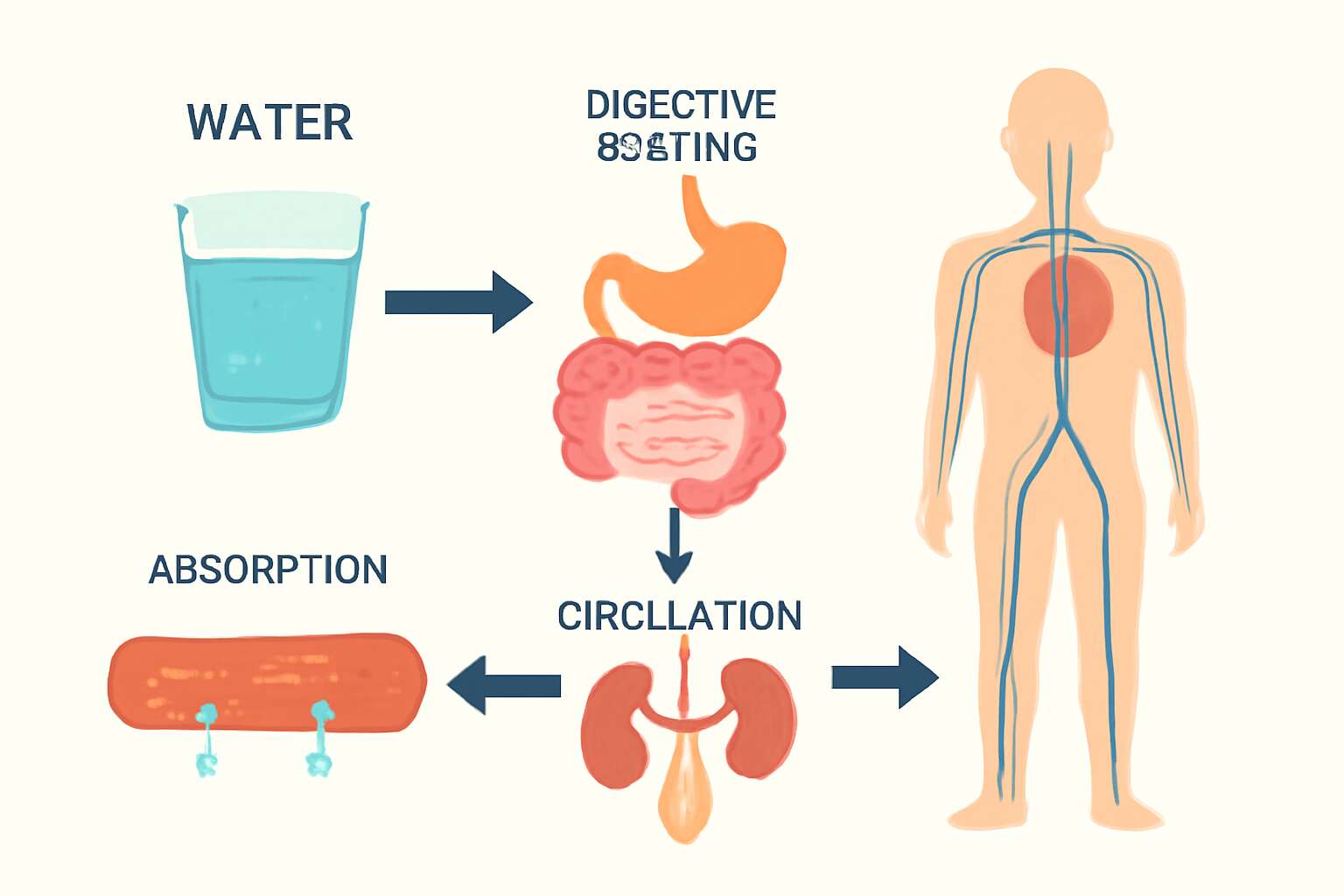
- Mouth to esophagus: quick transit toward the stomach.
- Stomach: fluids mix with gastric juice.
- Small intestine: most water enters the bloodstream.
- Blood and kidneys: water distributes and filters for balance.
The micro-episode map shows how water supports cells, temperature regulation, and waste removal. In South Africa’s climate, this path threads through daily life—from outdoor work to office routines—quietly shaping well-being.
Section Two: How Water Is Used After Absorption
In South Africa’s heat, the body sheds 2 to 3 litres daily through sweat, breath, and urine—a reminder that every sip matters. Understanding where water goes after drinking reveals a quiet map of nourishment moving beyond the swallow into the body’s living rooms.
As fluids slip past the throat, they glide to the stomach and onward to the small intestine, where most water enters the bloodstream and joins interstitial fluid that cradles our cells. Consider the micro-map: This is where water goes after drinking in action.
- bloodstream and interstitial fluid
- cellular hydration and nutrient transport
- renal filtration and waste concentration
In this arc, water tends the body’s temperature, cushions joints, and partners with kidneys to balance salts, letting metabolic engines hum with clarity. Daily life—from outdoor work to long office hours—depends on this quiet circulation.
Section Three: The Role of the Kidneys in Water Regulation
Your kidneys juggle nearly 180 litres of plasma each day, a river that keeps your hydration honest behind every South African sip. This is where water goes after drinking becomes a living map, moving from gut to bloodstream and onward to balance.
In the kidneys, the nephrons filter, reabsorb, and concentrate to sculpt the final urine.
- Filtration through the glomeruli
- Reabsorption of essential fluids and salts
- Urine concentration for waste removal
This quiet cycle preserves tissue hydration, directs nutrients, and lets your body’s engine hum with clarity.
Section Four: Factors Affecting Water Movement
Water, once sipped, begins a deliberate journey through your body. The drama plays out in quiet chambers as liquids drift through membranes, seeking balance rather than spectacle. Your body carries roughly 2 to 3 litres of water in its fluids, a hidden river that quietly decides where hydration lands. Hydration is less about a thirst cue and more about the route fluids take—from mouth to bloodstream to the tissues that keep life moving.
Understanding where water goes after drinking highlights the factors that steer its path. A handful of forces bend the journey: plasma osmolality, hormonal signals, gut absorption rate, activity levels, and environmental heat.
- Plasma osmolality and thirst signals
- ADH and fluid retention
- Gut absorption rate and meal content
- Exercise, heat, and altitude effects
These variables choreograph the distribution as water moves from gut into the bloodstream, then into interstitial spaces, and finally to cells that rely on a steady supply. I notice the tempo in SA’s heat, a reminder that hydration is a living system!
Section Five: Practical Hydration Tips
Sixty percent of the average human body is water, a quiet tide that never sleeps. Every sip sets off a gentle voyage, a soft hinge between mouth and marrow, where warmth meets balance and balance becomes life, especially in South Africa’s heat.
Understanding hydration means tracing the path water takes after drinking: from the gut into the bloodstream, along tiny channels between cells, and onward to the tissues that keep courage, motion, and memory alive—where water goes after drinking.
- Plain water as the baseline
- Mineral-rich beverages when you crave something different
- Hydration-rich foods such as cucumber, melon, and tomatoes
Hydration remains a living system, subtle and adaptable, a dance between desire and design as heat, exertion, and daily rhythms choreograph its tempo.


0 Comments